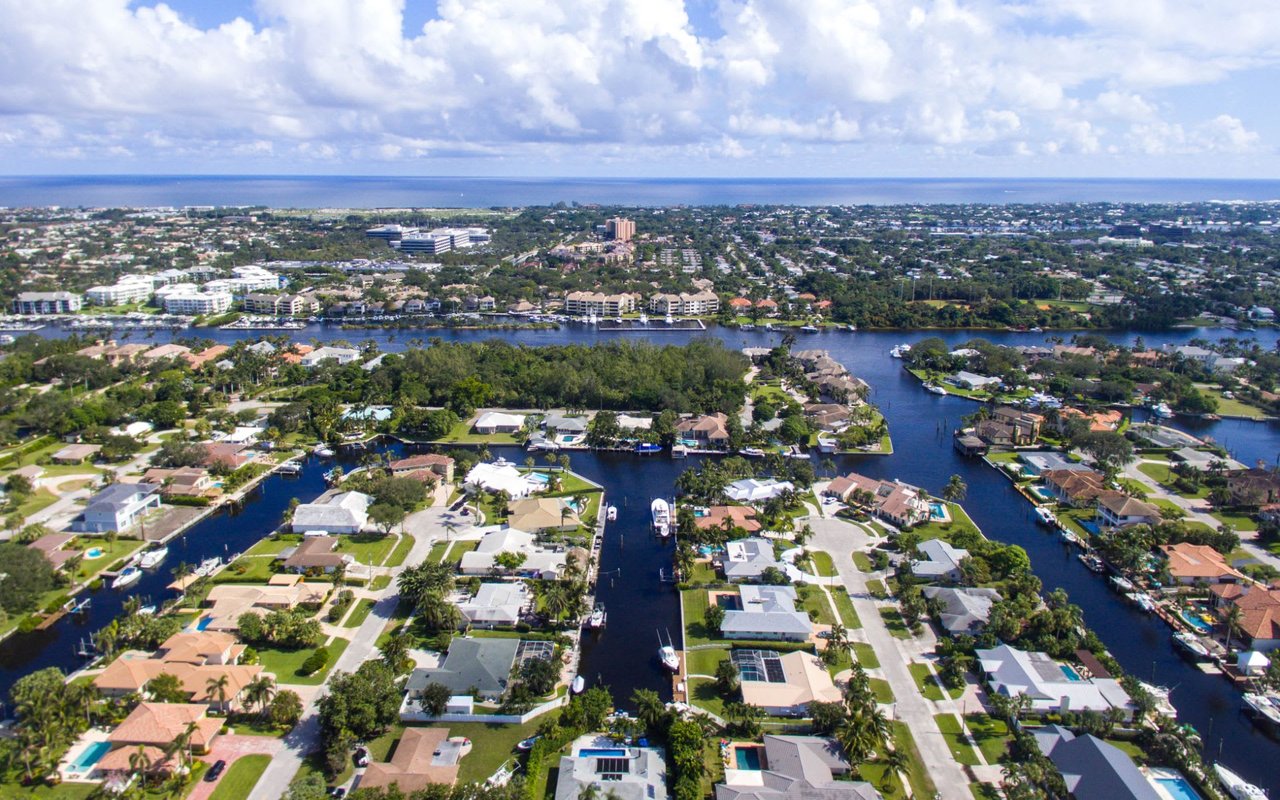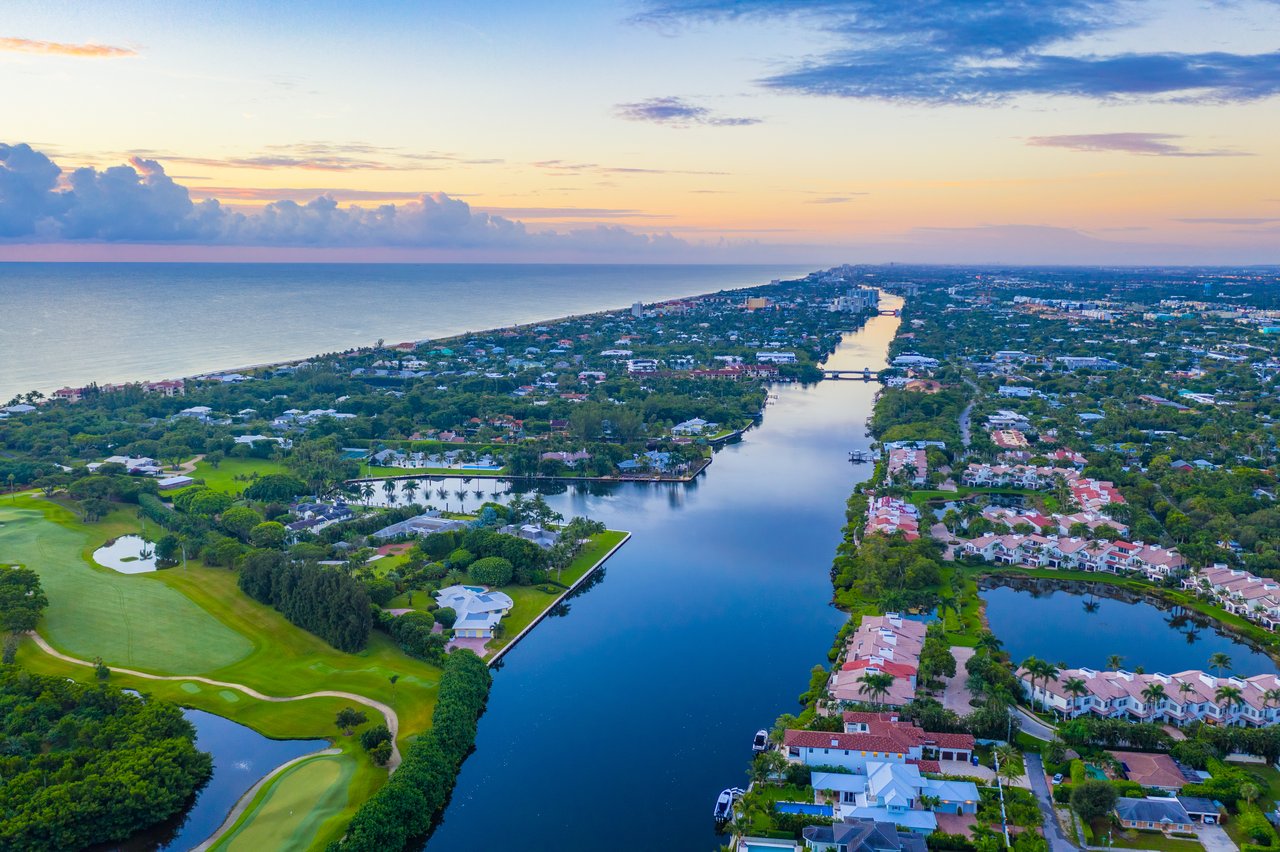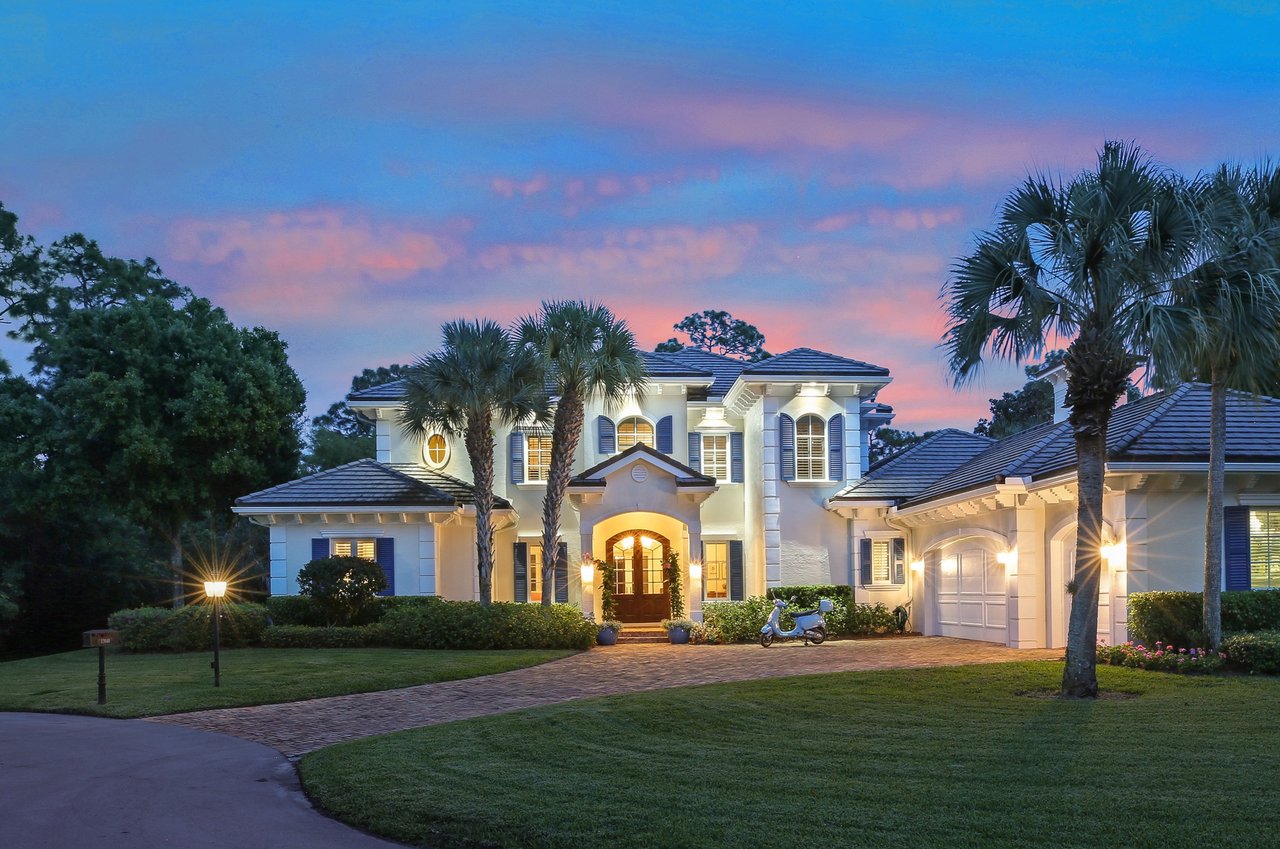
Over the past several years, Palm Beach has seen a meaningful increase in affluent individuals and families transitioning from seasonal ownership to full-time Florida residency. What was once viewed primarily as a winter destination has increasingly evolved into a true long-term home base , as buyers rethink lifestyle priorities, flexibility, and where they ultimately want to center their lives.
For many, the initial decision feels relatively straightforward. They purchase a home, spend more time in Florida, and begin imagining a future built around Palm Beach living.
But what surprises many buyers is that establishing Florida residency is often far more nuanced than simply buying property or spending additional time in the state.
The intent may be straightforward.
The execution is often far more involved than many buyers initially expect.
And increasingly, states with significant income tax exposure are evaluating residency transitions more carefully than many buyers initially realize.
While legal and tax advisors guide clients through the formal requirements, one of the most important things affluent families should understand is that residency is not simply about paperwork. It is about demonstrating that Florida has genuinely become the center of one’s life.
Buying a Home Is Only One Part of the Equation
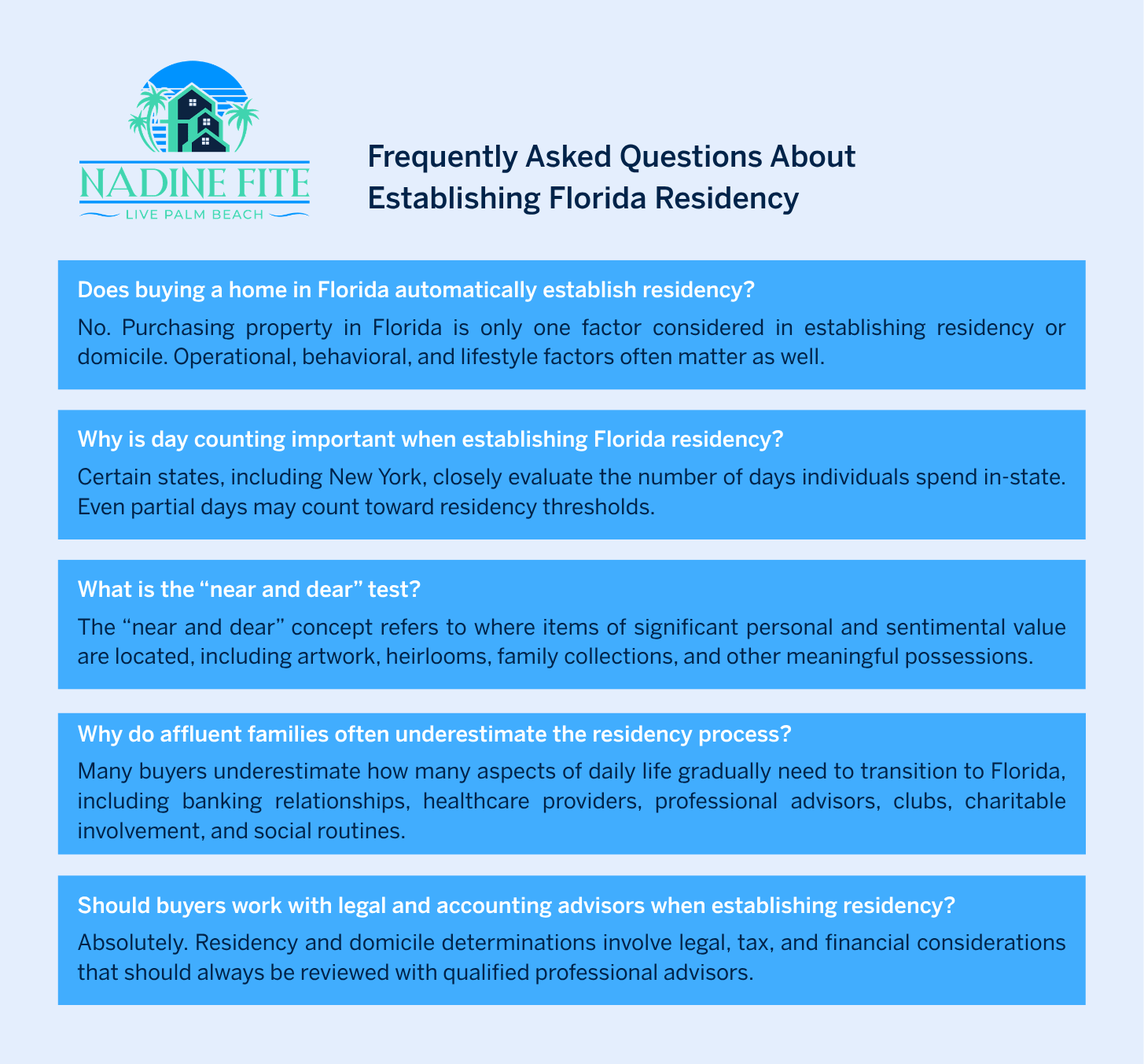
One of the most common misconceptions I hear is the belief that purchasing a Florida property alone establishes residency.
In reality, residency — or more specifically domicile — is often evaluated through a much broader lens. Formal documents matter, but behavioral patterns, operational consistency, and lifestyle realities matter as well.
In many cases, the question becomes less:
“Do you own a home in Florida?”
And more:
“Where is your life actually centered?”
That distinction is important.
Yes, there are practical steps involved:
- filing a Declaration of Domicile
- obtaining a Florida driver’s license
- registering vehicles in Florida
- updating voter registration
- applying for homestead exemptions
- changing addresses across financial and legal records
But affluent families are often surprised by how many aspects of daily life gradually need to transition to Florida as well.
The process is not simply administrative.
It is operational, behavioral, and often surprisingly emotional.
What Affluent Families Often Underestimate
Many buyers approach residency with good intentions but underestimate the sheer number of relationships, systems, and habits that gradually need to migrate to Florida over time.
Banking relationships shift.
Medical providers shift.
Veterinarians shift.
Insurance policies, estate documents, club memberships, charitable involvement, and professional advisors often shift as well.
Even relatively small details can become meaningful over time:
- where bills are mailed
- where vehicles are insured
- where flights originate
- where holidays are celebrated
- where organizations and memberships remain active
- where personal records consistently point
For many families, the process becomes less about checking boxes and more about thoughtfully migrating the infrastructure of daily life.
Clients are frequently balancing:
- business obligations
- family commitments
- children or grandchildren
- longstanding professional relationships
- philanthropic involvement
- social ties in multiple states
The real estate transaction itself may happen quickly.
The broader transition often takes place over several years.
And in many cases, Palm Beach increasingly becomes the place where life is centered rather than simply where winters are spent.
Why Time Tracking Matters More Than Many People Realize
Another area that often surprises buyers is the importance of day counting and location tracking.
Many affluent families are familiar with the general “183-day” concept associated with residency, but fewer realize how carefully presence can be evaluated in certain states.
In New York, for example, even a partial day in the state may count as a New York day for residency purposes. In practical terms, that means a brief stop, dinner meeting, or overnight trip can potentially matter more than expected.
As a result, many families eventually implement systems they never previously considered necessary:
- detailed travel calendars
- organized recordkeeping
- flight and travel documentation
- coordinated communication among advisors
What initially feels like a relatively simple lifestyle decision can quickly become operationally intricate.
That complexity is one of the reasons proactive planning tends to matter so much.
The “Near and Dear” Reality
One of the more interesting — and often overlooked — concepts that frequently emerges in residency discussions is what advisors sometimes refer to as the “near and dear” test.
The idea is simple:
Where are the possessions that hold the greatest emotional significance actually located?
Family heirlooms.
Artwork.
Collections.
Personal archives.
Objects tied to memory and identity.
As one advisor once explained it:
“If the Picasso stays in New York, New York may still believe New York matters more to you than Palm Beach.”
While somewhat simplified, the observation captures an important reality:
Residency is not evaluated solely through documents. It is often evaluated through behavior, attachment, and patterns of life.
In many ways, establishing residency is ultimately about demonstrating where someone’s true center of gravity has moved.
When Palm Beach Stops Feeling Seasonal
One of the most interesting shifts we’ve seen over the past several years is how frequently Palm Beach evolves from a seasonal retreat into a true long-term home base.
A property initially purchased as:
- a winter residence
- a lifestyle investment
- a flexible second home
gradually becomes:
- the place where holidays are celebrated
- where grandchildren visit
- where friendships deepen
- where routines stabilize
- where community forms
- where families increasingly spend meaningful time together
That transition is often subtle at first.
And for many families, it becomes clear only in hindsight that Palm Beach stopped feeling like an escape and quietly became home.
That emotional and behavioral shift is often just as important as the formal residency process itself.
Planning Matters More Than Most Buyers Expect
None of this is intended to create anxiety around establishing Florida residency. In fact, many individuals and families successfully navigate the transition every year.
But the smoothest transitions are usually the result of thoughtful planning rather than assumptions.
The families who tend to navigate residency most effectively are often those who:
- coordinate closely with legal and accounting advisors
- plan proactively
- maintain consistent documentation
- understand the operational realities involved
- recognize that residency is both legal and behavioral
Most importantly, they understand that the transition is rarely instantaneous.
It is usually a gradual alignment of lifestyle, relationships, routines, and long-term intentions.
Final Thoughts
Palm Beach has evolved into far more than a seasonal market. Increasingly, it has become a long-term home base for affluent families seeking not only favorable tax treatment, but also lifestyle flexibility, community, and a different pace of life.
And while establishing Florida residency may begin with a real estate purchase, it ultimately involves something much broader:
the thoughtful transition of one’s life.
For buyers considering that transition, understanding both the practical realities and the broader lifestyle evolution involved can make the process significantly smoother — and far more intentional.
Important Note
Residency and domicile determinations involve legal, tax, and financial considerations that vary based on individual circumstances and state-specific rules. Buyers considering a transition to Florida residency should consult closely with qualified legal, accounting, and tax advisors regarding their specific situation.
As a real estate advisor, my role is often to help clients understand the broader lifestyle, operational, and strategic considerations that accompany a move to Palm Beach, while coordinating alongside their professional advisory team throughout the transition.
Considering a Transition to Palm Beach?
Many of today’s buyers are not simply purchasing property in Palm Beach — they are thoughtfully repositioning how and where they live.
If you are considering a move to Palm Beach or evaluating the long-term transition from seasonal ownership to full-time Florida living, I would be happy to share insight into the market, communities, and broader lifestyle considerations that often accompany that decision.
Nadine Fite
Luxury Real Estate Advisor | Palm Beach Island
📧 [email protected]
📱 917.513.9592
🌐 LivePalmBeach.com
📍 Compass Palm Beach | 150 Worth Avenue, Palm Beach, FL 33480
Follow along: @Nadine_Fite_PBRealtor
#LivePalmBeach