How to balance lifestyle, value creation and value preservation when buying luxury real estate
A home is first and foremost a place to live. It should fit your lifestyle, reflect what you value and be somewhere you genuinely want to spend your time.
But at the luxury level, it is also a significant financial decision. I believe both considerations belong in the conversation from the beginning.
When I work with buyers, I am thinking beyond whether a property is beautiful or checks the boxes on a wish list. I am also considering the fundamentals of value creation and value preservation. What gives this property lasting value? What could strengthen or weaken that value over time? What can be improved, and what cannot be changed?
My role is not to tell a client what to buy. It is to identify those factors, help evaluate the tradeoffs and provide the perspective needed to make an informed decision.
Start With What Cannot Be Changed
One of the simplest principles I use when evaluating real estate is also one of the most important:
Finishes can be changed. Fundamental characteristics cannot.
A kitchen can be renovated. Flooring can be replaced. A home can be redesigned.
You cannot move the lot, change a condominium's orientation, create a better view or eliminate an undesirable neighboring use. And you cannot manufacture scarcity.
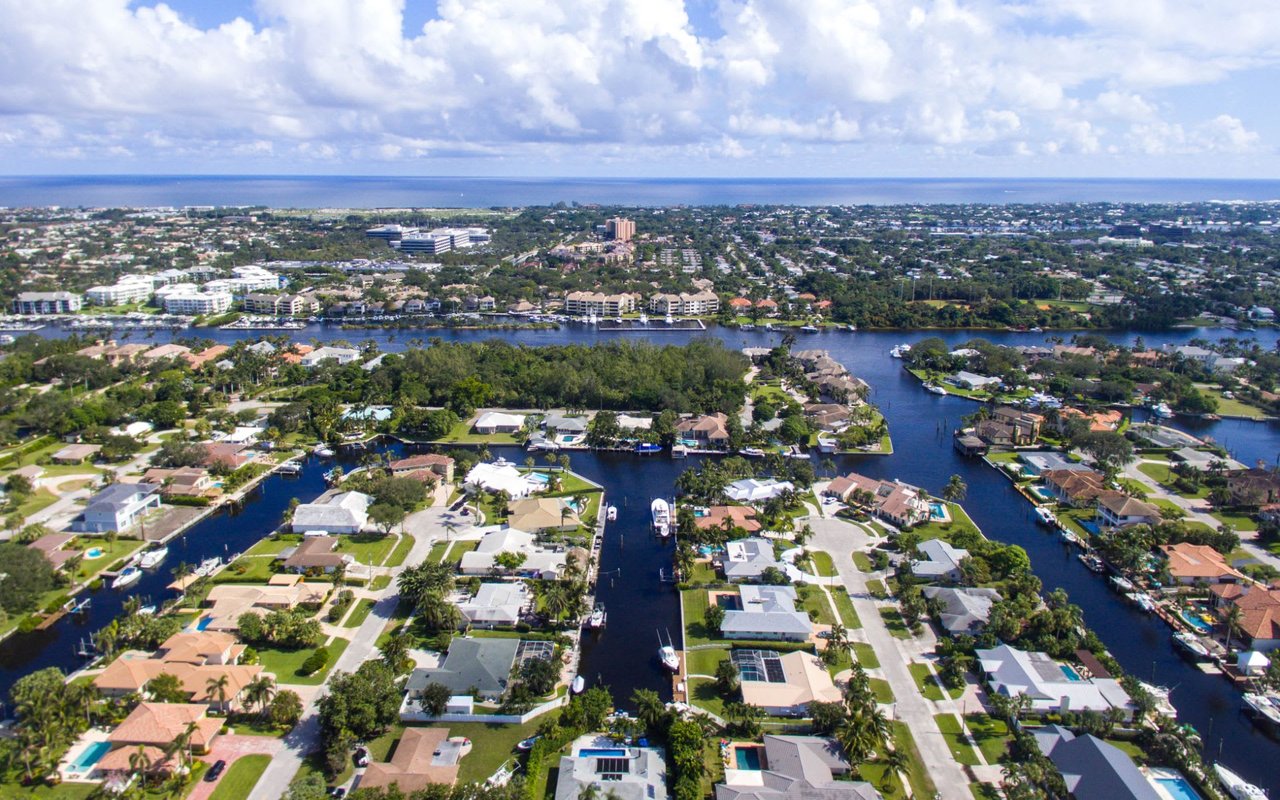
That distinction is particularly important when buying luxury real estate in Palm Beach County, where values can vary dramatically within a relatively small geographic area. Land on Palm Beach Island is finite. So are homesites within established club communities and many of the county's most desirable waterfront locations. Certain views, exposures, elevations, lot configurations and locations simply cannot be replicated.
Those intrinsic characteristics provide an important foundation for long-term value.
Cost and Value Are Not the Same Thing
Buyers understandably respond to beautifully renovated homes. Turnkey can be particularly appealing when someone wants to begin enjoying a Florida home immediately.
But what a seller spent does not automatically translate into equivalent market value.
This is especially relevant in the roughly $3 million to $7 million segment of the Palm Beach County luxury market, where many buyers would rather put their own finishing touches on a property than pay a significant premium for someone else's highly personal choices.
At the highest end, quality matters enormously, but so does longevity. Thoughtful architecture, exceptional materials and classic design tend to have broader and more enduring appeal than highly specific trends.
The question isn't simply what did the renovation cost? It is what value did it create?
Your Time Horizon Changes the Equation
A buyer planning to own a property for 15 or 20 years has considerably more latitude to prioritize personal enjoyment and make the home entirely their own.
A three-to-five-year horizon calls for greater investment discipline.
There is less time to absorb an overpayment or recover the cost of extensive improvements. If a neighborhood or building is in transition, there should also be a realistic understanding of whether the anticipated improvements are likely to materialize within the expected ownership period.
For a shorter-term owner, acquisition price, improvement costs, intrinsic property strengths and the depth of the future buyer pool all become particularly important.
That doesn't mean every decision has to maximize financial return. A buyer may knowingly pay a premium for something that brings tremendous personal enjoyment.
The important distinction is between knowingly paying for personal value and assuming the broader market will value it the same way.
A Great House Cannot Always Overcome a Compromised Location
A spectacular house can still be a challenging investment.
Location, neighboring properties, inconsistent upkeep, difficult access, an unusual floor plan or another characteristic that significantly narrows the future buyer pool can affect value regardless of how much is invested in the property itself.
That doesn't automatically make it the wrong home.
If a client loves a property despite one of these limitations, my role is to identify the issue, help them understand how the broader market may perceive it and evaluate whether the purchase price appropriately reflects that compromise.
An informed compromise can be a perfectly good decision. An unidentified one is something very different.
Look Beyond the Property Lines
Some of the factors that affect long-term value aren't obvious during a showing.
I look at neighboring properties and the consistency of upkeep. I consider whether a neighborhood is established or in transition. Elevation and flood zone matter. So do nearby roads, infrastructure and sources of noise.
Sometimes that means evaluating a neighborhood under different conditions.
In parts of West Palm Beach, for example, freight rail traffic can affect otherwise appealing emerging neighborhoods, and some of that activity occurs late at night. I have encouraged buyers considering those locations to return when the trains actually run so they can experience the conditions themselves.
The objective isn't to eliminate a neighborhood from consideration. It is to understand the complete picture and price the opportunity accordingly.
Look for Opportunities to Create or Preserve Value
Protecting value isn't the same as avoiding anything imperfect.
Sometimes the opportunity lies in recognizing an intrinsic strength that can be enhanced: an exceptional lot with an outdated house, a strong location with a property that needs thoughtful improvement, or a neighborhood where meaningful investment is already underway.
The distinction is important.
Money spent trying to overcome a fundamental weakness may never be recovered. Money spent improving a property with strong underlying fundamentals can be very different.
That is where value creation and value preservation intersect.
Scarcity Matters
Some of the strongest real estate purchases have something genuinely difficult to reproduce.
It might be an exceptional parcel of land, direct ocean or Intracoastal frontage, a protected view, superior elevation, an unusually desirable exposure or a coveted location within a community.
Scarcity does not justify any price. But genuine scarcity can provide an important foundation for long-term value.
This is why I encourage buyers to distinguish between what can be changed later and what may be difficult, or impossible, to find again.
A dated kitchen is solvable.
A fundamentally superior piece of real estate may not be replaceable.
Buy for Your Life. Understand the Investment.
There is no formula for the perfect luxury real estate purchase.
One buyer may prioritize boating access. Another wants walkability, privacy, a particular club community, direct ocean views or enough space for children and grandchildren. Those priorities should drive the search.
But once we identify a property that fits the life a buyer wants, I believe there should also be a clear-eyed assessment of the investment.
The best purchase isn't necessarily the property with the highest theoretical return. It is the property that works for the way you want to live, purchased with a clear understanding of where its value comes from and what could strengthen or weaken it over time.
That is the balance I want my buyers to achieve: enjoying the home today while making a sound financial decision for the long term.
About Nadine Fite
Nadine Fite advises buyers and sellers throughout Palm Beach County with a strategic, data-driven approach to luxury real estate. Her work combines market analysis, local knowledge and thoughtful due diligence to help clients make informed real estate decisions aligned with both lifestyle and long-term value.
Nadine Fite | Luxury Real Estate Advisor | Compass
917.513.9592 | [email protected] | NadineFite.com
Palm Beach | West Palm Beach | Palm Beach Gardens | Jupiter | Juno Beach | North Palm Beach | Delray Beach | Manalapan and surrounding Palm Beach County communities